ABC of skincare actives



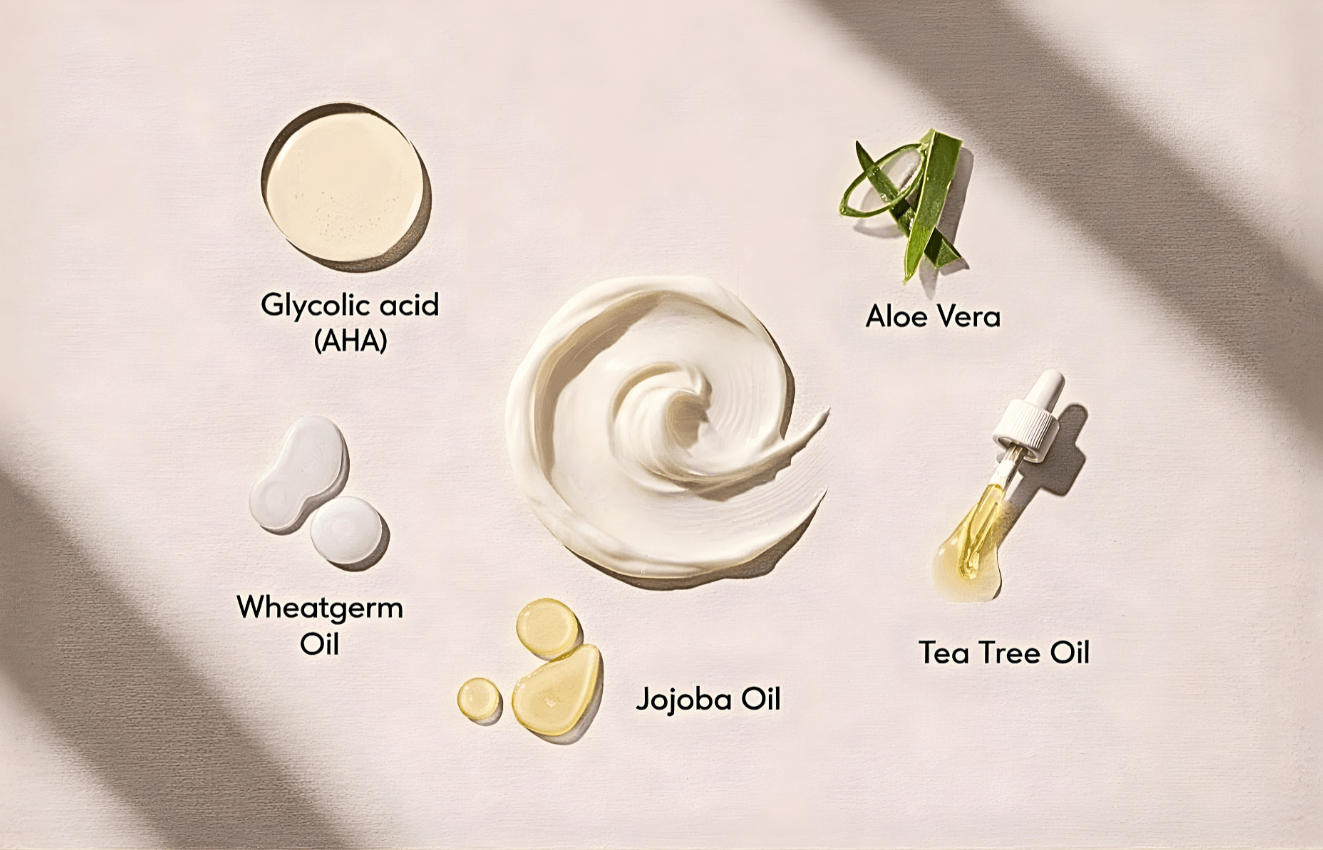
Skincare today is no longer just about cleansing and moisturizing. Many everyday products now contain targeted ingredients formulated to support specific skin needs. These are known as skincare actives—ingredients that help improve the look and feel of concerns such as acne-prone skin, dark spots, or uneven texture.
Understanding the ABC of skincare actives can help you make more informed choices and build a routine that supports skin health over time, rather than overwhelming it.When used thoughtfully, skincare actives can complement a routine without disrupting the skin’s natural balance
A is for AHA (Alpha Hydroxy Acid)
AHA, or Alpha Hydroxy Acid, is one of the most commonly used categories of skincare actives.
In simple terms, AHAs help loosen the bonds between dead skin cells on the skin’s surface, supporting natural exfoliation. Research shows that AHAs support surface renewal and can improve skin texture when used at appropriate concentrations¹. When used in cosmetic formulations at appropriate levels, AHAs are known to support smoother-looking skin.
This is why AHAs are often included in cleansers such as AHA face washes, where they provide gentle exfoliation during cleansing. In wash-off formats, AHAs provide controlled exfoliation without prolonged contact, making them suitable for regular routines. Among the key benefits of AHA for skin are improved smoothness, reduced buildup, and better absorption of follow-up products.
B is for BHA (Beta Hydroxy Acid)
BHA, or Beta Hydroxy Acid, works differently from AHAs. The most well-known BHA is Salicylic Acid (BHA). Unlike AHAs, BHAs are oil-soluble, which allows them to travel deeper into pores and help dissolve excess oil and debris².
Because of this property, BHAs are commonly used in skincare routines designed for oily or congestion-prone skin types.. A BHA facewash can help support clearer-looking skin by cleaning within the pore lining rather than just the surface.
Salicylic acid is commonly included in products for oily or blemish-prone skin due to its cleansing properties..C for complementary actives
Not all actives exfoliate. Some support the skin in other important ways.
Tea Tree Oil is a botanical ingredient with a long history of its use in cosmetic formulations. . Known for its antimicrobial properties, Tea Tree Oil for acne is often discussed as a supportive ingredient for breakout-prone skin³. When included in making a Tea Tree facewash, it offers a plant-based approach to maintaining skin clarity during cleansing.
Vitamin E in skincare plays a different role. Vitamin E is widely used in cosmetic products as a skin-conditioning antioxidant .It is a fat-soluble antioxidant that helps protect the skin from environmental stress caused by pollution and daily exposure⁴. In products like a Vitamin E facewash, this ingredient supports the skin’s natural defense mechanisms during routine cleansing rather than actively exfoliating.
How actives work together
The effectiveness of active ingredients in skincare lies in balance. When formulated appropriately, different skincare actives can complement one another without overwhelming the skin. AHAs support surface renewal, BHAs help cleanse within pores, botanical actives offer calming support, and antioxidants help protect against external stressors. When formulated thoughtfully, these actives can complement each other without overwhelming the skin.
Understanding skincare actives also helps in avoiding common mistakes, such as over-exfoliation or combining too many strong ingredients at once. Gentle, consistent use often delivers better long-term results than aggressive routines.
Using active wisely
- Introduce exfoliating actives gradually
- Avoid using multiple strong acids together unless advised
- Follow exfoliation with hydration and sun protection
- Adjust usage based on season and skin sensitivity
- Always follow product usage instructions
The ABC of skincare actives is not about complexity it’s about clarity. Knowing what AHAs, BHAs, antioxidants, and botanical actives do allows you to choose products that align with your skin’s needs and use them with intention. Over time, this informed approach helps support healthier-looking, more balanced skin.
Ref:
1. https://www.paulaschoice.com/ingredient-dictionary/ingredient-glycolic-acid.html
2. https://www.paulaschoice.com/ingredient-dictionary/ingredient-salicylic-acid.html
3. https://pmc.ncbi.nlm.nih.gov/articles/PMC1360273/
4. https://pmc.ncbi.nlm.nih.gov/articles/PMC4976416/
Disclaimer: This content is for general skincare awareness only. This content is not intended to be specific medical advice, diagnosis or treatment. Please consult your healthcare practitioner for further guidance


